The Lovers, over an old Joker
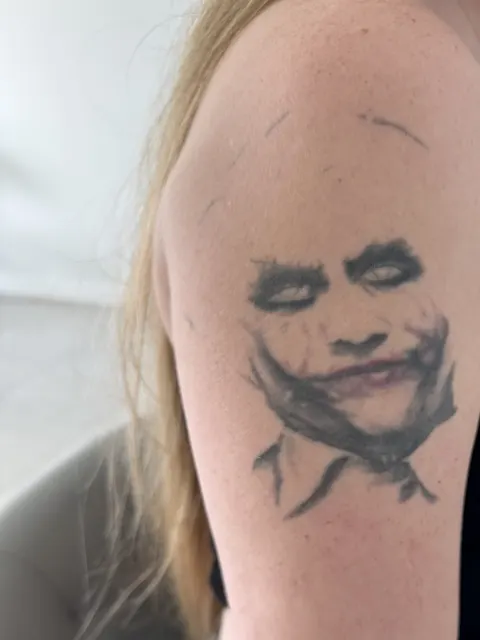
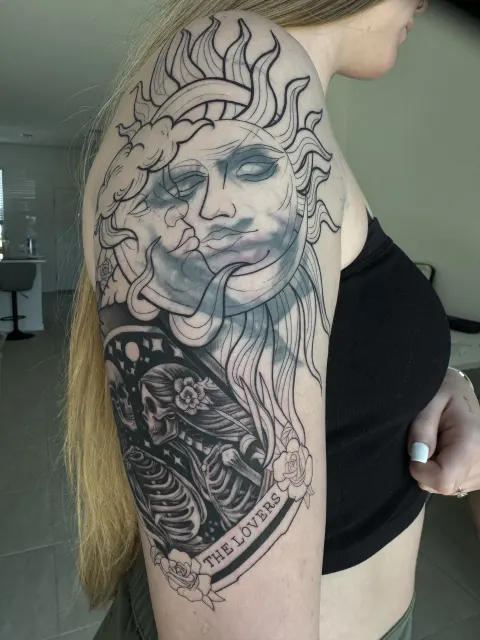
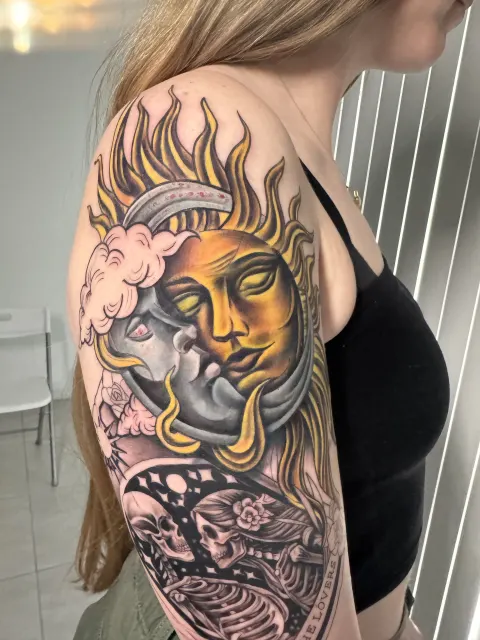
A faded portrait turned into a sun-and-moon half sleeve. The old dark areas were planned into the new shadows; the design was adjusted freehand on the arm before the first line.
A tattoo you no longer want to wear, or one you still love that has gone dull. Dymon Jimenez covers or restores it after an honest read of what is already on the skin. Private sessions by appointment in North New Jersey, with guest dates in Orlando, Charlotte and Dallas.
Send a photo on WhatsAppWhat each one is
A cover-up is a new tattoo placed over an old one. Ink does not erase ink: the new design hides the old work by putting dark values, dense texture or strong color exactly where the old lines sit, which is why the new piece is usually larger and darker than the one it covers.
A restoration keeps the design you already have. When a tattoo you still like has gone dull, the linework is reinforced and the saturation refreshed until it reads again, as in the Japanese leg sleeve on this page. It keeps the story of the piece and costs you less skin than a cover-up.
Styles built on darkness and density cover best: Traditional, with heavy outlines and solid fills; Neo-Oriental, with waves, wind bars and deep color backgrounds; and Black & Grey planned with deep shadows. Fine lines, pastel color and open skin let the old tattoo show through.
Every cover-up and restoration starts with photos, not with a promise. The quote is written once the old tattoo has been read.
Send clear daylight photos of the old tattoo, its approximate size and your idea for the new piece, in English or Spanish.
Dymon reads how dark the old tattoo is, how large and where it sits, then tells you whether it can be covered, restored or needs laser lightening first.
The new design is drawn on an iPad with its darkest areas over the darkest parts of the old work. On the day, the stencil is adjusted freehand on the skin.
A cover-up can take one session or several, depending on size, placement and detail. The quote sets how many sessions, how long each runs and the price.
The honest limits · Dymon Jimenez
A very dark, very large old piece may leave no room for a new design on top. Covering it often means going much bigger and darker than you wanted, so lightening the old ink with laser first is a common recommendation; that decision is yours, made with a laser specialist.
Placement sets limits too. Hands, fingers, the neck and areas already crowded with other work give a cover-up little space to grow, and the old design will guide some of the choices. A sound plan says this before any deposit is paid.
Case files
Real cases, photographed before and after. The old tattoo is read first: how dark it is, where it sits, what it can hide.
A faded portrait turned into a sun-and-moon half sleeve. The old dark areas were planned into the new shadows; the design was adjusted freehand on the arm before the first line.
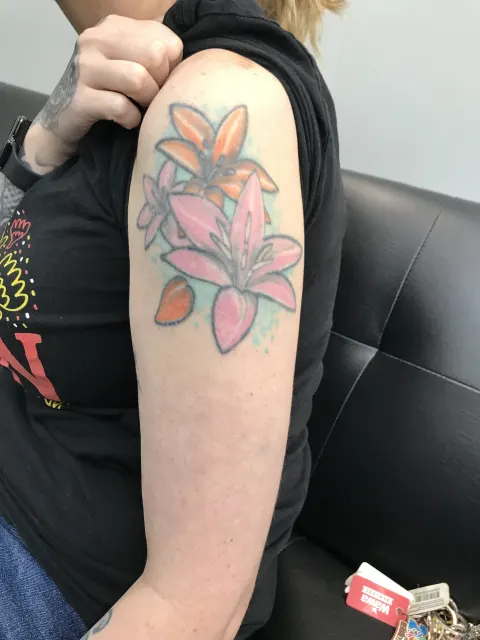
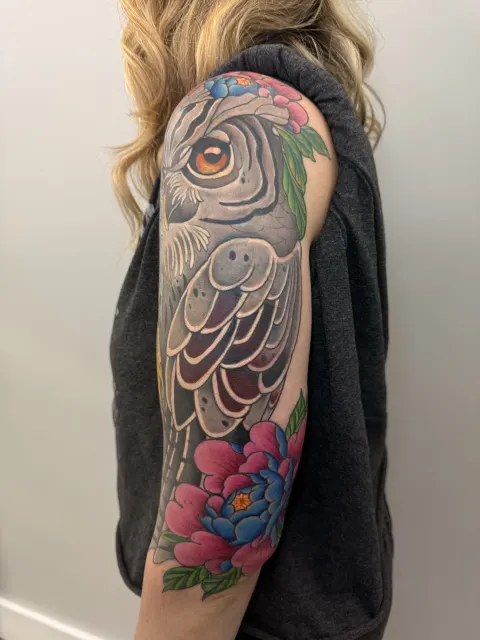
Pale lilies on the shoulder disappear inside the owl's head and a band of peonies. Color and value were chosen to sit on top of the old pinks, not fight them.
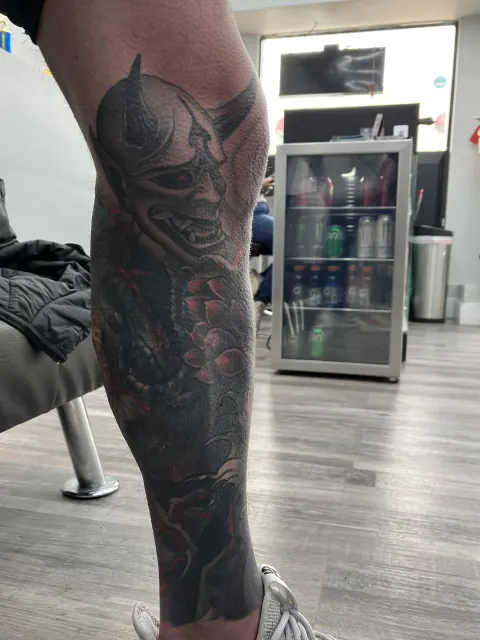
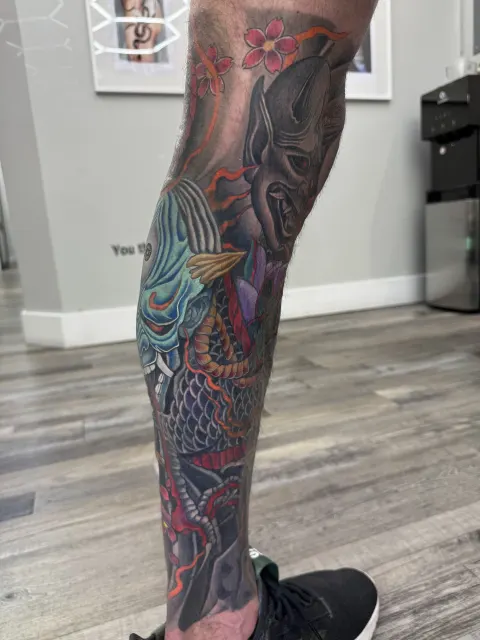
Years had flattened the color and blurred the edges. Lines were reinforced and the palette rebuilt section by section until the hannya and the koi read again from across a room.
Questions
No. Many tattoos can be covered when the new design is larger and darker than the old one, but very dark, very large or crowded pieces may leave too little room. In those cases, lightening the old ink with laser first is a common path, or a restoration may make more sense. Photos of the area are the starting point.
If you still like the design and it has only gone dull, a restoration usually makes more sense: the lines are reinforced and the color refreshed, and you keep the piece you chose. If you want a different image, a cover-up is the path. Clear photos are enough for Dymon to tell you which one fits.
It depends on the size, placement and level of detail. Large cover-ups can take more than one session. The quote defines how many sessions the piece needs and how long each one runs.
There is no fixed price. A cover-up is quoted like any other piece, according to its size, placement, level of detail and number of sessions, and it is usually larger than the tattoo it hides. Once you accept the quote, a $100 deposit holds your date and is deducted from the total.
Dymon Jimenez does not have his own studio. Sessions are private and by appointment in North New Jersey, in Hudson and Bergen counties, with guest dates by season in Orlando, Charlotte and Dallas. The address for your session is confirmed together with the date.
Read the guide
Write on WhatsApp or send the brief with a photo of the old tattoo, its size and your idea for the new piece.